
Choosing a Bulk Olive Oil Supplier: The Buyer's Audit Checklist
Published on July 8, 2026 · Updated on July 12, 2026 · 8 min
By the Virginia trading team · reviewed by Tarek Neffati, president
A single bulk olive oil shipment rarely commits less than several tens of thousands of euros, which makes the choice of supplier worth more than any price negotiation. Four profiles share the market — mill-direct producer, cooperative, merchant-exporter, broker — and each fits a different type of buyer, volume and risk appetite. This guide compares the four models, walks through the 10-point audit to run before any commitment, and lists the red flags that should end a discussion no matter how attractive the quote.
Four supplier profiles, four different businesses
There is no such thing as "the" bulk olive oil supplier. Behind the same offer — extra virgin, available now, competitive price — sit very different organisations, each with strengths and blind spots you need to understand before comparing quotes.
The producer or mill selling direct
The shortest possible chain: an estate or a mill sells its own production. The buyer gets a strong product identity (one origin, one variety, a signature sensory profile), a single point of contact and a price with no middleman margin. The limits are structural. Volume is capped by the estate's own harvest — and olive trees alternate, so a strong year is typically followed by a weak one. Export logistics (flexitanks, document packs, any incoterm beyond ex-works) are not always mastered, and if the lot fails analysis, there is no internal plan B.
The cooperative
A cooperative pools the crops of dozens, sometimes hundreds, of growers. It offers larger volumes, often competitive pricing and genuine territorial roots. On the other side of the ledger: member deliveries of uneven quality that pull the average around from year to year, governance that can slow commercial decisions, and seasons where the domestic or bottled market takes priority over bulk export.
The merchant-exporter backed by a network of mills
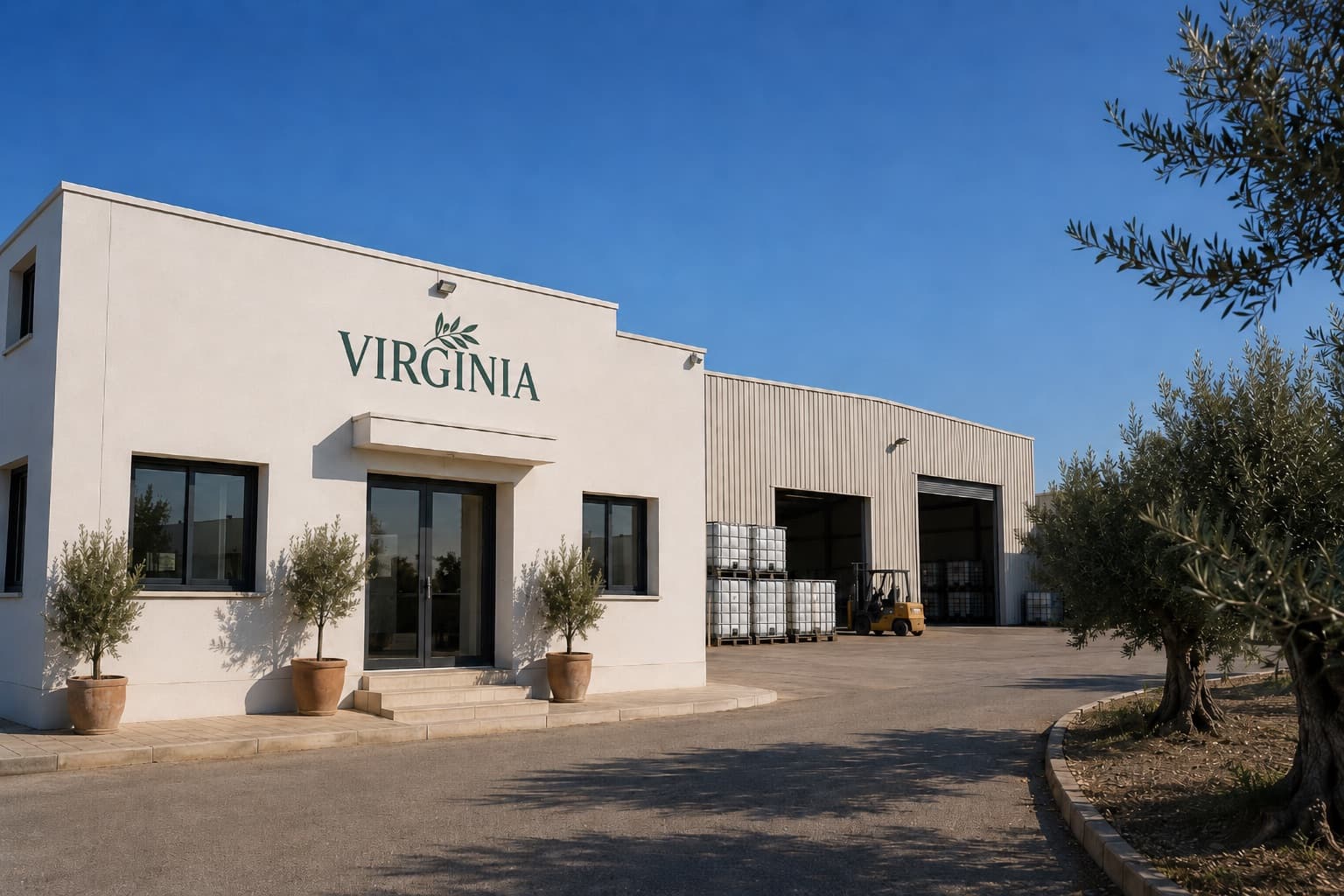
This is Virginia's model, so let us describe it plainly: we do not grow olives and we do not mill them. The business consists of selecting, tasting, analysing and shipping oils from a network of partner mills in Tunisia, giving access to more than 30,000 tonnes per campaign. The model's value rests on three things. Multi-mill access secures volume and continuity — when one region disappoints, another compensates. Selection happens lot by lot, with a certificate of analysis and a tasting, and every lot stays linked to its mill of origin. And the export chain — documents, containers, incoterms — is the core trade, not a side task. The limit is equally plain: a merchant is only as good as its selection discipline and its transparency. That is exactly what the audit checklist below is designed to test.
The broker
A broker matches buyer and seller for a commission and never owns the product. Brokers know what is available right now and can be useful for a market sounding or an emergency cover. But they carry no product liability: the quality is whatever the seller behind them delivers, traceability and after-sales are delegated, and buyers sometimes discover who the real supplier is only once a dispute starts.
The comparison at a glance
| Profile | Accessible volumes | Season-to-season continuity | Traceability | Main limitation |
|---|---|---|---|---|
| Producer / mill | Low to medium | Exposed to alternate bearing | Excellent (single origin) | Capped volume, limited export tooling |
| Cooperative | Medium to high | Good | Good at group level | Uneven member deliveries |
| Merchant-exporter | High | High (multi-mill sourcing) | Good if each lot is tied to its mill | Depends on its selection discipline |
| Broker | Variable | Unpredictable | Delegated to the actual seller | No product liability |
The 10-point supplier audit
Whatever the profile, the audit is the same. Ten points, in the order in which they can be verified.
- A COA for the lot, before commitment. The certificate of analysis must carry a lot number, an analysis date and an identified laboratory — and it must come before the signature, never after. Knowing how to read an olive oil COA is the first filter of any bulk purchase.
- A sample of the actual lot. Not a "typical" sample of the range: a sealed drawing from the exact lot that will be loaded, for you to taste and send to your own laboratory.
- Traceability down to the mill. The supplier must be able to say which mill each lot comes from. A blend is not a problem; an anonymous blend is.
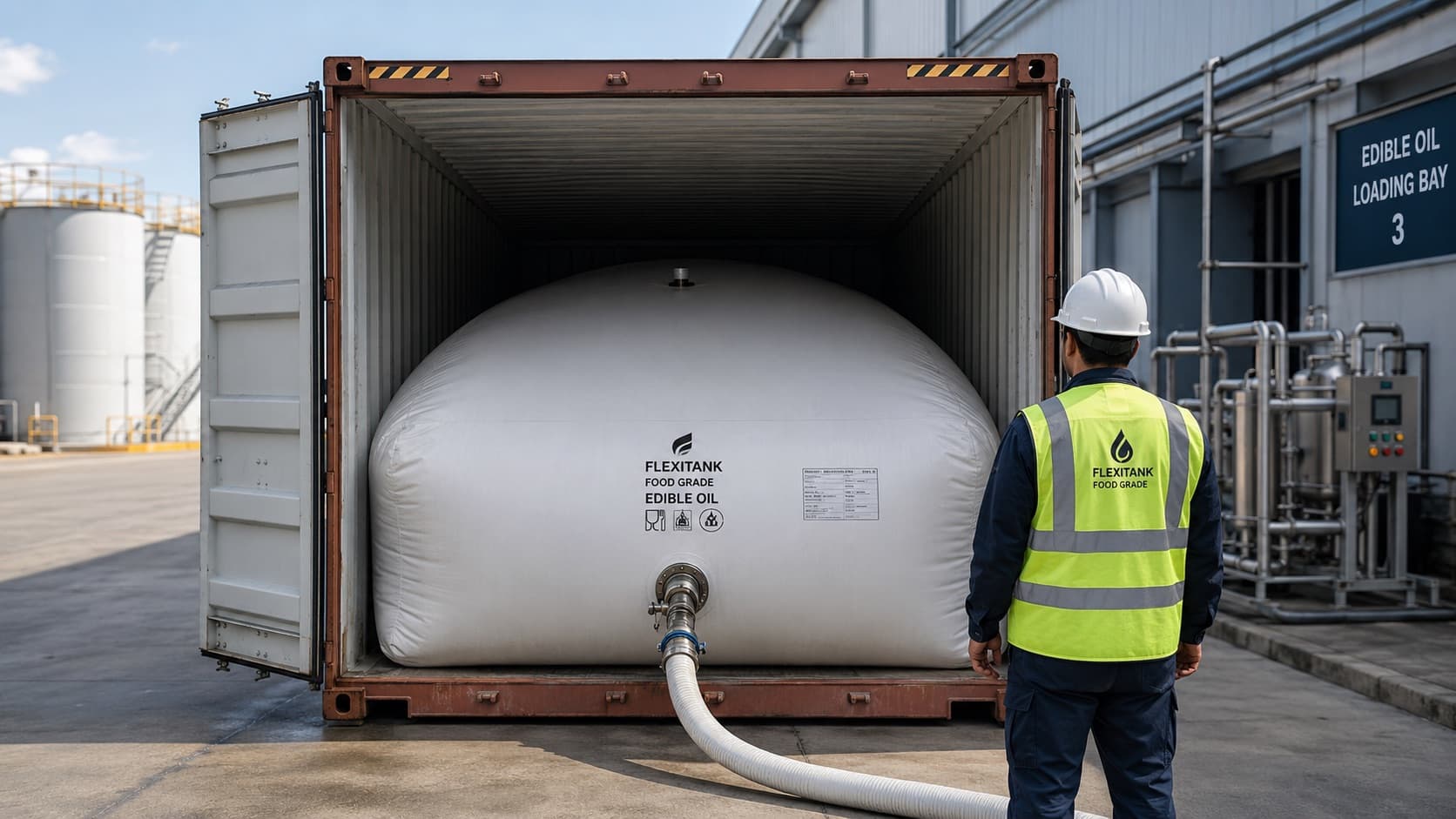
- Volume and repeatability. One flexitank holds 21 to 24 tonnes. The real question is not "can you deliver this volume?" but "can you repeat it monthly or quarterly, through to the end of the campaign?".
- Stainless steel storage under nitrogen. Between milling and loading, oxygen is the oil's main enemy. Stainless tanks, nitrogen blanketing, temperature-controlled halls: verify on paper or on site.
- Site certifications. HACCP or ISO 22000 for the storage and loading sites, valid organic certificates if the oil is sold as organic — dated documents covering the sites actually involved. This is the backbone of our quality approach.
- Verifiable export references. Destinations already served, formats already shipped, client references or, failing that, shipping evidence.
- Command of the export document pack. Invoice, packing list, certificate of origin, health certificates, certificate of analysis: an export shipment is won or lost in the paperwork as much as in the tank. An incomplete file blocks a container at customs as surely as a quality defect.
- Incoterms in writing, and understood. FOB, CFR, CIF, as defined by the ICC Incoterms rules: who pays for what, who insures what, where risk transfers. In the written offer, not in a phone call.
- Independent counter-analysis accepted. A supplier confident in its lots accepts contradictory sampling at loading and analysis by a third party such as SGS. A refusal is an answer in itself.
Five red flags that should end the conversation
- A price well below the market. Olive oil is a globally quoted commodity; nobody sells sustainably at 15% under the market. The discount is paid back in actual grade, adulteration or litigation.
- No COA, or a generic one. A certificate without a lot number or analysis date protects nothing: it describes a product range, not your shipment.
- Refusing a pre-contract sample. There is no acceptable reason to sell several tonnes of oil without showing a litre of it.
- Vague origins. Undetailed blends, reluctance to name the mills: incompatible with your own labelling and traceability obligations.
- Nothing left at the end of the campaign. A supplier with empty tanks from April to October transfers its sourcing problem straight onto your production line.
Single origin or blend?
Single origin — one estate, one mill — delivers a signature profile and a strong marketing story, at the cost of total dependence on one harvest. A multi-mill blend, by contrast, makes it possible to hold a consistent sensory and analytical profile from one shipment to the next, which is what industrial users and bottlers value most. The right question is not "blend or no blend" but: is every component traced and analysed, and is the final blend covered by its own certificate?
Remote audit or site visit?
A remote documentary audit — certificates, COAs, a video walk-through of the tank hall, references — is enough to start with, on one condition: the contract must lock in everything else. Contradictory sealed sample, counter-analysis at loading, payment tied to the documents. A site visit earns its cost before scaling up: the actual state of the tanks, site hygiene, seal management, and whether the sales pitch matches the facilities. Many buyers combine both: a first contract secured remotely, then a visit within the first year of the relationship.
The typical onboarding path, from specification to flexitank
- Specification sheet. Target grade (extra virgin at a maximum of 0.8% free acidity under the International Olive Council standard, virgin, lampante, organic), sensory profile, target analytical parameters, annual volume, collection schedule, preferred incoterm.
- Samples plus COA for the proposed lot or lots. At Virginia, qualifying a requirement takes less than 24 business hours, and every sample ships with the certificate of the lot it comes from.
- A small-volume trial. A few 200 L drums or 1,000 L IBCs to validate the product, the documents and the logistics without tying up the cash of a full container.
- Scaling up. A 21–24 tonne flexitank, contracted by the lot or for the campaign, on bulk Tunisian olive oil.
Put the checklist to the test
Run the ten points on us first: lot COA before signature, a sealed sample from the actual shipment, the mill of origin named, SGS counter-analysis accepted at loading — none of it needs negotiating at Virginia. Send your specification and judge on the documents: a qualified answer within 24 business hours.
Read next
GuidesQuality
Supply Chain Due Diligence (CSDDD) for Bulk Olive Oil Buyers
French vigilance law, Germany's LkSG, the EU's CSDDD: what bulk Tunisian olive oil buyers already need to document from their suppliers today.
August 21, 2026 · 7 min read
MarketGuides
Exporting Tunisian Olive Oil to the US: Customs & FDA
HTS 1509 duty rates, FDA facility registration, Prior Notice and USDA organic rules: the practical guide to importing Tunisian olive oil into the US.
August 19, 2026 · 7 min read

Tell us what you need.
Volume, grade, packaging, destination: describe your project and we'll get back to you within one business day with an offer at the best price — or the right questions.