
Olive Oil Contract Bottling: Fill at Origin or in Europe?
Published on July 10, 2026 · Updated on July 12, 2026 · 8 min
By the Virginia trading team · reviewed by Tarek Neffati, president
Contract bottling — co-packing — means handing the packaging of your olive oil to a partner who owns the line: oil intake, filling, capping, labelling and palletising, under your brand and your specification. For Tunisian oil, the real decision is not finding a line; it is deciding where that line runs. At origin, next to the storage tanks, or in Europe, next to your customers. The two models price out very differently, and this guide walks through the trade-off item by item.
Who uses contract bottling
Three buyer profiles account for most of the demand:
- Brands without a plant. You have a positioning, a sales network and a finished pack design — but no filling line. A co-packer turns the project into deliverable pallets with zero capital expenditure.
- Bottlers out of capacity. Your own line is saturated in peak season, or a format you do not run in-house (a 5 L tin, miniatures) lands on your desk. Outsourcing the overflow beats turning the order away.
- Retailers buying private label. The chain writes a specification and buys a finished product under its own brand; the full mechanics are covered in our private label olive oil guide.
Two commercial set-ups coexist. In pure contract filling, you supply the oil and pay for the service only. In full service, the partner supplies oil and packaging as well — the trader-packer model behind our wholesale bottled olive oil offer, where a single contract covers the raw material, the packing and the quality control.
Filling at origin vs filling in Europe: the real trade-off
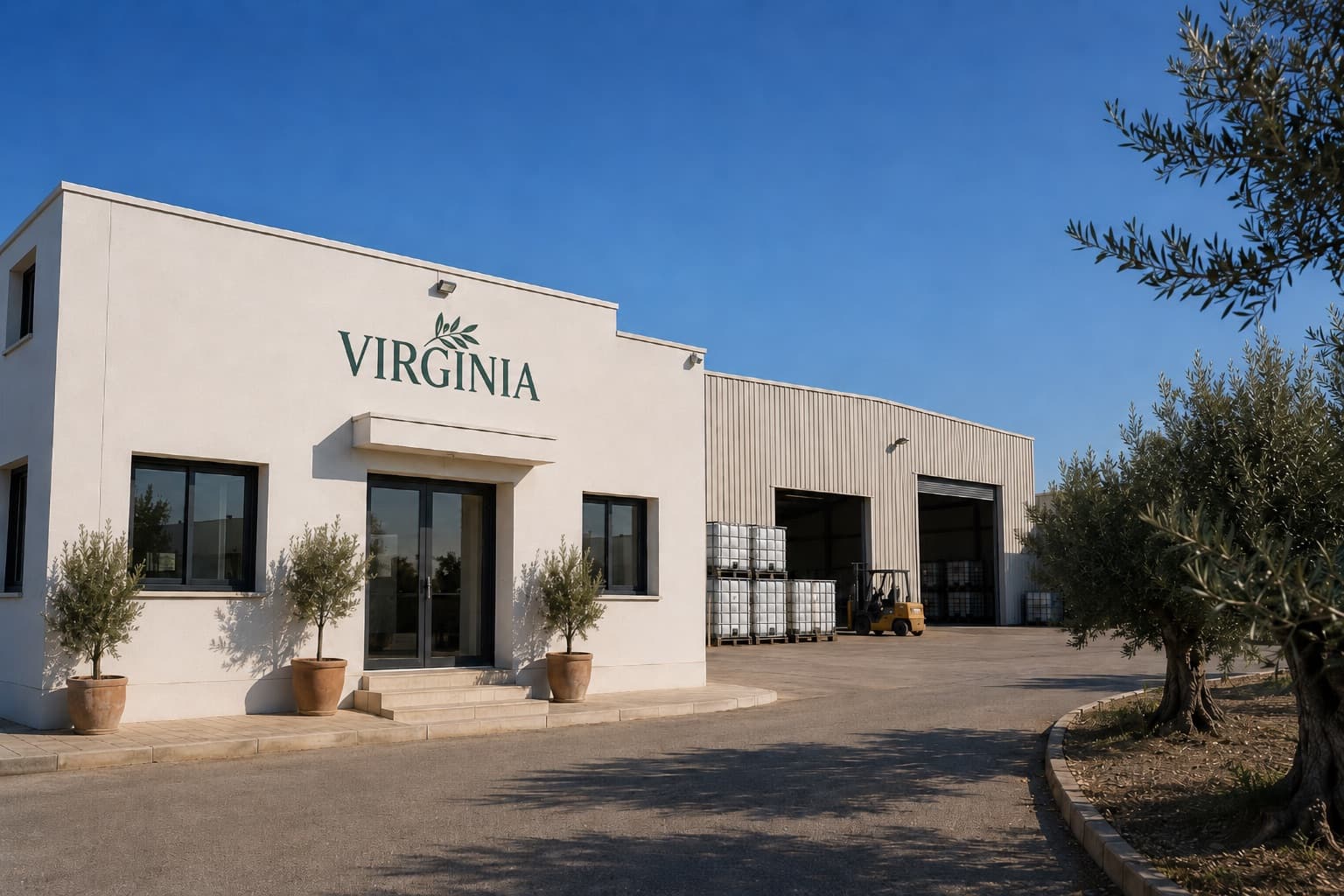
Bottling at origin, in Tunisia, has three structural advantages. Filling cost first: labour and line overheads are markedly lower than in Western Europe. Proximity to the oil second: the product moves from nitrogen-blanketed stainless steel tanks straight into the bottle, then travels filled and sealed — one transfer instead of two. Freshness control third: no flexitank leg, no discharge, no interim buffer storage at a third-party site before filling; oxygen exposure is limited to what the line itself controls.
Bottling in Europe answers a different set of priorities: responsiveness (a replenishment run happens in days, not weeks of ocean transit), short runs across many SKUs with pallet-level minimums, fast relabelling or artwork changes, and simple intra-EU logistics — pallets on demand rather than a full container to absorb.
One honest caveat: the label carries the same origin either way. For virgin and extra virgin grades, the designation of origin is mandatory in the EU, so Tunisian oil bottled in Italy is still labelled as Tunisian origin. What changes is the place of packing, the lead times and the cost structure — not the provenance on the front of the bottle.
| Criterion | At origin (Tunisia) | In Europe |
|---|---|---|
| Filling cost | Lower (labour, oil on site) | Higher |
| Transfers / handling breaks | 1 — the oil travels bottled | 2 — bulk leg, then filling |
| Freshness / oxygen exposure | Bottled next to the storage tanks | Depends on bulk transport and buffer storage |
| Replenishment lead time | Production plus ocean transit (weeks) | Days to a few weeks |
| Short runs, multi-SKU | Penalised: full-container logic | Well suited: pallet-level MOQs |
| Label changes | Expensive once the lot has shipped | Fast |
| Origin on the label | Tunisia | Tunisia — bottling does not change origin |
In practice, many brands combine the two: a base volume packed at origin for core shelf listings, plus a European top-up for launches, promotions and slow-rotation formats. Virginia runs both set-ups — lines in Tunisia and a partner plant in Italy — precisely because neither covers every need on its own.
The line, step by step — with its control points
- Oil intake and release. Every lot arrives with its COA: free acidity, peroxide value, K232/K270/ΔK, sensory profile. Nothing is discharged into the line tanks until it matches the specification — the single most important quality gate in the whole chain.
- Optional filtration. Brilliant oil (plate or cartridge filtration) or deliberately unfiltered: a commercial choice, but one made before filling, not after sediment shows up in the bottle.
- Inerting. Nitrogen blanket on the buffer tanks and nitrogen dosing into the headspace at filling: dissolved oxygen and headspace oxygen are the two drivers of rancidity.
- Filling. Volumetric or gravimetric fillers set to the nominal volume at the reference temperature of 20 °C, with continuous statistical checks on actual content (see the e-mark rule below).
- Capping and sealing. Torque checks and capsule integrity checks: a badly seated closure means oxidation now and leaking cartons later.
- Labelling and coding. Front and back label application, position control, then inkjet coding of lot number and best-before date — legibility verified at the end of the line.
- Case packing and palletising. Approved pallet pattern, carton coding (EAN/ITF-14), stretch-wrapping, and retention samples pulled for the sample library.
In-line controls should cover three things at minimum: net content (weight or volume), dissolved oxygen after transfers, and closure integrity. Insist that the control plan — including sampling frequencies — is written into the contract.
What you supply — and what you sign off
- The bottle. UV-protective glass (dark or antique green): light degrades olive oil faster than ambient temperature does. Check line compatibility — neck finish, height, stability on the conveyor — before committing to the glass order.
- The closure or pourer. For retail sale in the EU, olive oil must be presented in packs of no more than 5 litres, fitted with an opening system that can no longer be resealed once first opened (Delegated Regulation (EU) 2022/2104).
- The label. Grade, origin, nominal quantity, best-before date, lot, storage conditions, nutrition declaration: the wording is regulated, and mistakes are paid for in relabelling. Our review of the EU olive oil labelling rules covers each mandatory particular.
- The print proof. A signed proof freezes the artwork before printing. No run starts without it — it protects you as much as the co-packer.
- The specification. Target COA, referenced packaging components, tolerances, control plan, pallet pattern. The more precise it is, the less room interpretation has.
The e-mark: filling tolerances you are accountable for
The ℮ sign next to the nominal volume is not decorative. It is a metrological commitment defined by Directive 76/211/EEC, and it binds the filler to three requirements: the average actual content of the batch must be at least the nominal volume; the share of bottles exceeding the tolerable negative error must stay small enough to pass the statistical reference test; and no single bottle may exceed twice that error.
The tolerable negative error depends on the format: 9 ml on a 250 ml bottle, 15 ml from 500 ml up to 1 litre (i.e. 2% on a 750 ml), and 1.5% above that — 75 ml on a 5 L tin. Volume is defined at 20 °C, which in practice forces a slight temperature-compensated overfill. An often-missed point: when the product is filled outside the EU, the importer carries the metrological compliance. Ask the co-packer for its statistical control records — you will need them if trading standards come knocking.
Best-before date, lot number, sample library: who answers for what
The best-before date is set under the responsibility of the operator under whose name the product is marketed (Regulation (EU) 1169/2011) — with your own brand or a private label, that is you, informed by the filler's stability data. Common practice runs from 12 to 24 months from bottling, with 18 months the de facto standard; Italy caps the date at 18 months from bottling for its own market. The nuance that matters commercially: the clock starts at bottling, but the oil ages from harvest. Best practice is to hold the bulk in nitrogen-blanketed stainless steel and bottle in successive waves — the conditions are detailed in our guide to storing bulk olive oil.
The lot number must link each bottle to the oil lot and, upstream, to the mill it came from: that is what makes a targeted recall possible instead of a total one. The sample library — retention bottles from every lot, kept until the best-before date plus a margin — is your reference in any dispute. And the tolling agreement should state in writing: material yields (filtration and line losses), glass breakage allowance, filling tolerances, line speeds, non-conformity handling, and the co-packer's product liability insurance.
Cost structure and minimum order quantities
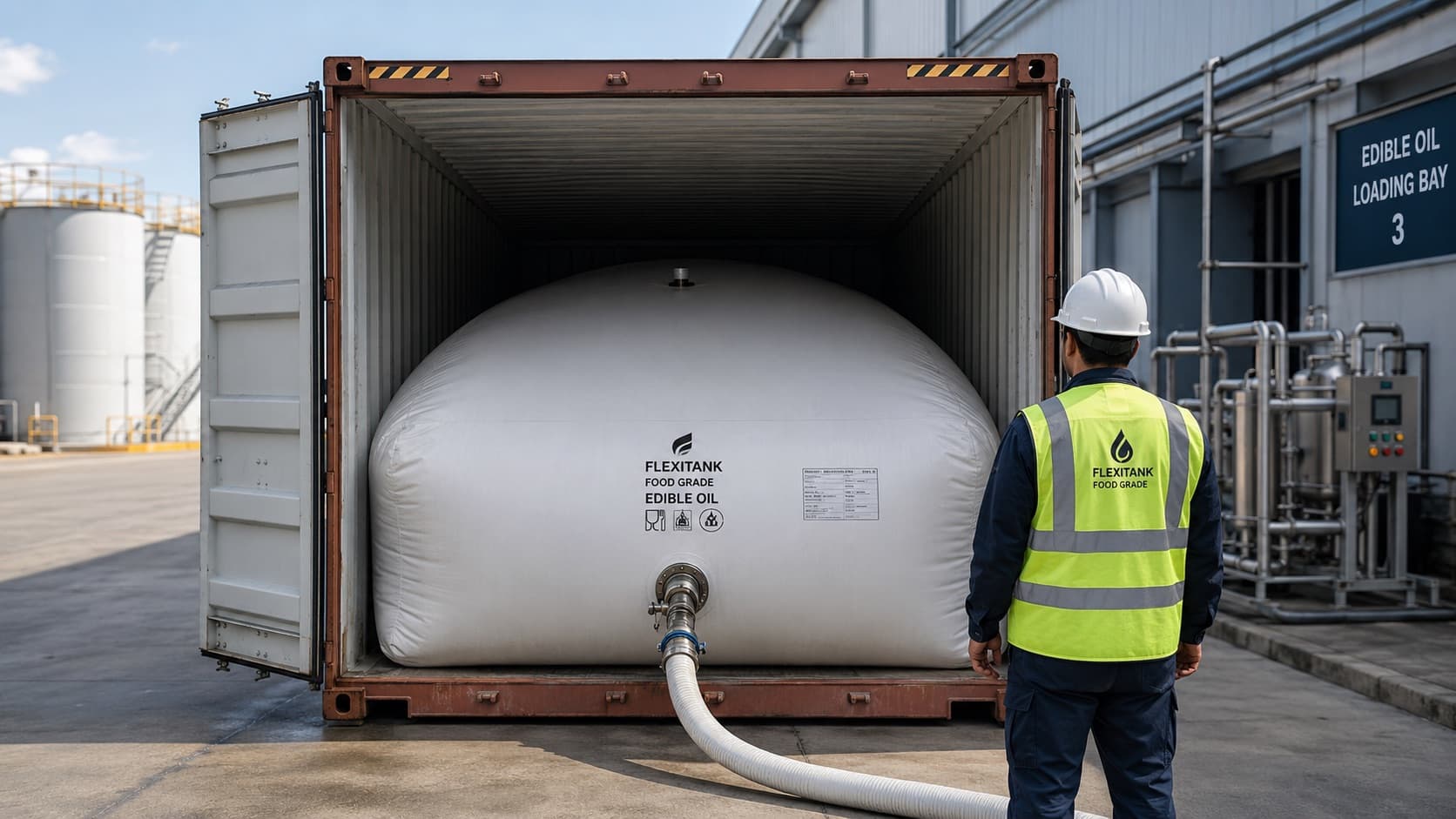
The cost of a finished bottle breaks into four blocks. The oil dominates the material cost. Dry goods come next — glass first, then closure, label, carton — each with purchasing minimums of their own, often higher than yours: sharing one bottle across several SKUs and varying only the label is the simplest lever available. The filling fee is a per-unit price that falls with run length: every format change stops the line, so long runs dilute the fixed costs. Logistics last: bottled oil travels less dense than bulk — a 20-foot container of bottles carries roughly 12 to 14 tonnes of oil against 21 to 23 tonnes in a flexitank, which raises the freight cost per litre.
On minimums: in Europe, a SKU is typically negotiated by the pallet; ex Tunisia, the economic unit is the full container, possibly mixed across several SKUs. More than any other parameter, this is what should steer your choice between the two models.
Bottling with Virginia, in Tunisia or in Italy
Rather than defending one model, we price both for you: lines at origin in Tunisia for volume, a partner plant in Italy for short runs and fast replenishment. Your specification — control plan, filling tolerances, a COA per lot traced back to the mill, SGS counter-analysis on request — goes into the contract as written. Send formats, volumes and target markets through our quote request: a costed origin-versus-Europe comparison within 24 business hours.
Read next
GuidesQuality
Supply Chain Due Diligence (CSDDD) for Bulk Olive Oil Buyers
French vigilance law, Germany's LkSG, the EU's CSDDD: what bulk Tunisian olive oil buyers already need to document from their suppliers today.
August 21, 2026 · 7 min read
MarketGuides
Exporting Tunisian Olive Oil to the US: Customs & FDA
HTS 1509 duty rates, FDA facility registration, Prior Notice and USDA organic rules: the practical guide to importing Tunisian olive oil into the US.
August 19, 2026 · 7 min read

Tell us what you need.
Volume, grade, packaging, destination: describe your project and we'll get back to you within one business day with an offer at the best price — or the right questions.