
Deodorized Olive Oil: The Industrial Buyer's Guide
Published on August 28, 2026 · 7 min
By the Virginia trading team · reviewed by Tarek Neffati, president
A buyer looking for an olive oil with a neutral taste and color, stable under heat, and priced well under a virgin oil, runs into the word "deodorized" sooner or later. It is a legitimate raw material for industrial frying, canning or certain cosmetic bases — but also a category that gets misread, often confused with the fraud it can be used to mask when it is mislabeled. Here is what deodorized olive oil actually is, when to buy it, and what to demand on the COA before signing.
What "deodorized" actually means
Deodorization is a step in refining, not a regulatory category on its own. It comes last in the chain, after alkali neutralization (which strips free fatty acids) and bleaching on adsorbent clays (which removes pigments and trace metals): steam is injected under vacuum, typically between 200 and 250°C depending on the line, to strip out the volatile compounds responsible for taste, smell and sensory defects. The result is a clear, near-colorless oil with no perceptible aroma — hence the everyday term "deodorized" used for refined olive oil.
Our guide to olive oil grades, from lampante to pomace covers the full regulatory nomenclature. Worth repeating here: the feedstock for this refining is almost always lampante oil — virgin oil unfit for direct consumption — or, less often, a downgraded virgin. EU Delegated Regulation 2022/2104 caps refined olive oil's acidity at 0.3%, a threshold the International Olive Council trade standard mirrors exactly. On its own, deodorized oil cannot be sold retail in the EU: it must be blended with virgin oils under the label "olive oil composed of refined olive oils and virgin olive oils," or stay an industrial input never reaching the end consumer.
Why a professional buyer asks for it
Three kinds of need push a procurement team toward deodorized rather than virgin oil:
- Neutral taste and heat stability. Industrial snack frying, fish canning or a large-batch sauce line need a fat that does not dominate the finished product's flavor and holds up to repeated cooking above 180°C without developing oxidation compounds fast. A deodorized oil's neutral profile fits that brief exactly, where an extra virgin would add an unwanted fruitiness at a cost wildly disproportionate to the use case.
- Stabilizing a blend. A marketer selling "composed" olive oil in supermarkets routinely mixes a neutral refined base with a percentage of virgin oils to fine-tune fruitiness, color and final acidity lot to lot, while keeping raw material cost under control.
- A neutral cosmetic or syndet base. A liquid soap or cleansing base formula needs an oil with no residual smell or color that would clash with the added fragrance. Deodorized refined oil is the reference grade for this use, distinct from virgin oil kept for care formulas built around polyphenols and fruitiness.
| Use case | Recommended grade | Priority specs | Typical packaging |
|---|---|---|---|
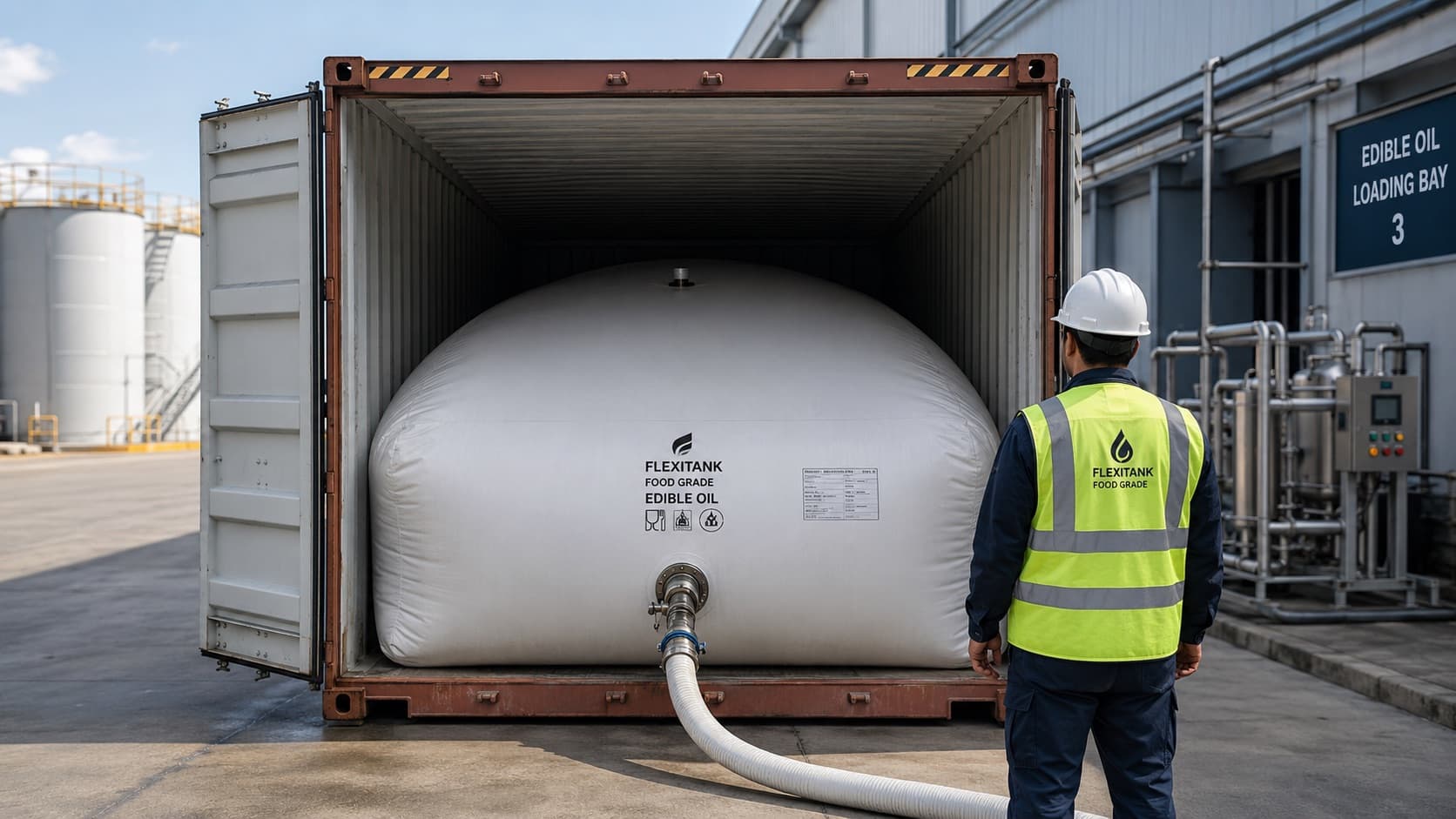
| Industrial frying, snacking | "Olive oil" (refined + virgin) | K270, Rancimat stability, acidity ≤ 1% | IBC, flexitank |
| Canning (fish, vegetables) | "Olive oil" (refined + virgin) | Taste/smell neutrality, low peroxide | 200 L drums, IBC |
| Retail / private-label blending | Refined blended with virgin | Target acidity, color, residual fruitiness | IBC, isotank |
| Cosmetic syndet base | Refined deodorized | Total odor/color neutrality, low peroxide | IBC, 200 L drums |
| Technical use (bulk soap-making) | Ordinary virgin or refined lampante | Stable saponification value | IBC, flexitank |
The specs to demand on the COA
A deodorized-oil COA that only shows acidity and peroxide says almost nothing useful. Ask for, as standard:
- Acidity and peroxide value, to confirm the lot meets the declared commercial name's threshold — 0.3% for pure refined oil, 1% for an "olive oil" blend. Our quality parameters guide — acidity, peroxide, K232/K270 walks through reading each index closely.
- K270, a secondary-oxidation marker that jumps noticeably on a refined oil: an abnormally high K270, even on a supposedly neutral input, points to poorly controlled refining or feedstock that was already degraded before processing.
- 3-MCPD and glycidyl esters. These two process contaminants form specifically at the deodorization step, driven by temperature and residence time. They never appear on a standard COA and must be requested explicitly, with the regulatory thresholds that apply to the finished product's declared name. Our dedicated piece on 3-MCPD and glycidyl ester contaminants covers the thresholds, what drives their formation, and the refiner-side levers that keep them down.
- Oxidative stability (Rancimat test), relevant for repeated frying use or a cosmetic base with a long shelf life.
- A basic smell and color check on arrival. A deodorized oil that carries a residual odor or an unusual tint signals an incomplete process or an undeclared blend.
What neutrality must never hide
The line between "deodorized oil sold and declared as such" and "virgin oil dressed up with deodorized oil" is exactly the ground olive oil fraud is fought on. A lot marketed as extra virgin that contains a fraction of refined oil often clears every acidity and peroxide test while failing purity criteria: the ΔK (UV extinction) drifts outside tolerance, the sterol profile shifts — purity criteria are what expose a blend, regardless of how fresh the lot otherwise looks. Buying deodorized oil is not a problem in itself once the product is correctly named on the contract, the label and the shipping document; the risk starts when that same material circulates under a virgin designation it does not deserve.
Where the feedstock comes from in a Tunisian sourcing context
Tunisia's crop varies more from year to year than Spain's or Italy's, both in volume and in initial oil quality: a season hit by olive fly pressure, hail or a compressed harvest window produces a larger share of lampante than a clean, well-timed campaign. That lampante does not disappear — it moves into refining, and a meaningful share of it becomes the deodorized base that ends up in industrial frying oil, canned fish in oil, or a cosmetic syndet formula sold well outside Tunisia. For a buyer, this means the deodorized-oil market is partly a release valve for a harvest's rougher fraction, and its price and availability track the season's quality profile as much as its tonnage. A campaign with heavy fly damage can, somewhat counterintuitively, make deodorized oil more available even as virgin oil tightens — worth checking with a supplier before assuming the two markets always move together.
Price, refining contract and logistics
Refining starts from a feedstock — lampante or downgraded virgin — priced well below marketable virgin oil, and the industrial step itself adds only a modest processing cost next to the value of an extra virgin's fruitiness. Deodorized oil therefore sits structurally below the price of an extra virgin or even an ordinary virgin, a spread that moves season to season with lampante availability. For a given volume, that spread is worth negotiating against a precise refining spec rather than blind:
- Feedstock traceability before refining (origin, starting grade) — something our partner mills document lot by lot.
- Deodorization parameters (temperature, residence time) fixed contractually to limit 3-MCPD and glycidyl ester formation without changing the intended sensory profile.
- Packaging matched to volume: 200 L drums for small quantities, IBC for mid-size lots, flexitank or isotank for a full container.
- An independent counter-analysis option, for instance through SGS, to de-risk a first lot before committing to a season's volume.
Virginia France is a negociant-packer, not a mill: we mobilize our network of partner mills in Tunisia to qualify a request for deodorized oil or a refined-virgin blend within 24 business hours, with systematic tasting and a per-lot COA that includes process-contaminant parameters on request. To scope a need for industrial frying, canning or a syndet cosmetic base, the bulk page sets out the volumes we can access each season; a quote request is the fastest way to pin down a precise refining spec before committing to volume.
Read next

GuidesQuality
Supply Chain Due Diligence (CSDDD) for Bulk Olive Oil Buyers
French vigilance law, Germany's LkSG, the EU's CSDDD: what bulk Tunisian olive oil buyers already need to document from their suppliers today.
August 21, 2026 · 7 min read
MarketGuides
Exporting Tunisian Olive Oil to the US: Customs & FDA
HTS 1509 duty rates, FDA facility registration, Prior Notice and USDA organic rules: the practical guide to importing Tunisian olive oil into the US.
August 19, 2026 · 7 min read

Tell us what you need.
Volume, grade, packaging, destination: describe your project and we'll get back to you within one business day with an offer at the best price — or the right questions.