
Ocean Freight for Bulk Tunisian Olive Oil: Book Early
Published on August 17, 2026 · 7 min
By the Virginia trading team · reviewed by Tarek Neffati, president
The Rades-to-Europe crossing never touches the Suez Canal, and it's measured in hours, not weeks. Yet a buyer of bulk Tunisian olive oil who ignores what's happening on global shipping lanes right now is taking a real risk with 2026-2027 sourcing plans: containers harder to secure on the right dates, freight rates that move between quote and loading, Mediterranean transshipment ports under strain. Here's what matters before locking a booking calendar, weeks ahead of the crush.
A shipping crisis that keeps dragging on
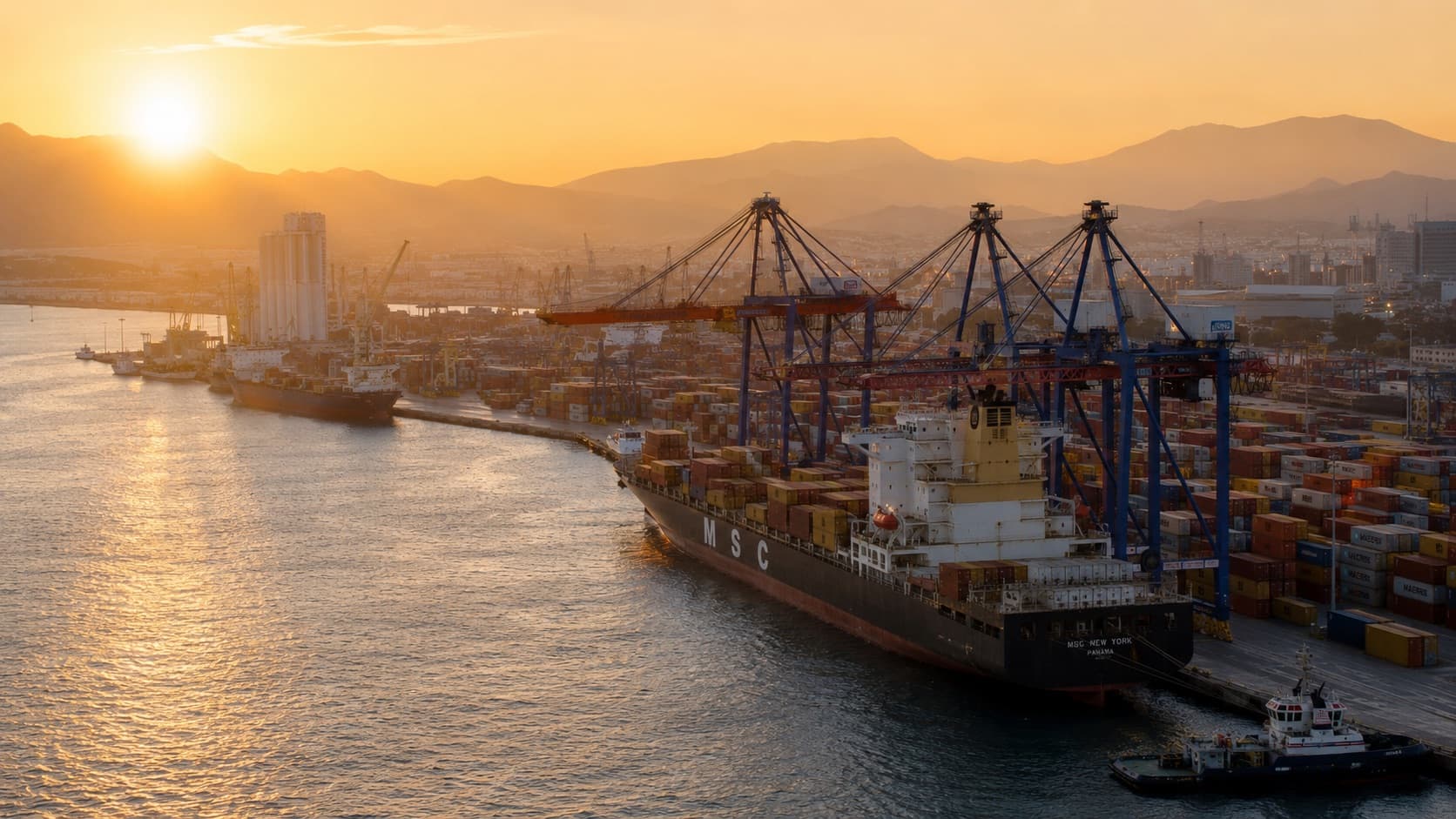
Since late 2023, Red Sea attacks have pushed nearly all Asia-Europe container traffic to divert around the Cape of Good Hope, adding ten to fourteen days of sailing per rotation. In early 2026, despite more than a hundred days without a claimed attack on a merchant vessel, Suez transits were still running roughly 60% below pre-crisis levels, according to data cited by BIMCO, the international shipowners' association, and confirmed by gCaptain. Container traffic has been hit hardest: shipping lines remain reluctant to redeploy their most expensive assets on a route they still consider too uncertain, even as tankers and bulk carriers return more readily.
This matters well beyond the Asia-Europe trade. Every vessel routed around Africa instead of through Suez ties up tonnage for longer on the same rotation — mechanically pulling capacity out of the global market, including on routes that have nothing to do with Asia. Carriers redeploy their most profitable ships onto the long routes, which tightens availability and rates on shorter trades too, Mediterranean feeders included.
The knock-on effect on transshipment ports
Vessels rounding Africa don't call directly at every European port: they first discharge at large Mediterranean transshipment hubs, from which smaller feeders redistribute containers to secondary ports. According to an analysis by Sourcing Journal, this connection pressure has significantly congested western Mediterranean ports: Barcelona saw container volumes rise roughly 17% year on year in February, Algeciras roughly 10% over the same period, straining already-tight terminals and lengthening the gap between mother vessels and feeders.
That congestion shows up in price. Market data published in early 2026 put Far East-Mediterranean freight around USD 4,200 per 40-foot container, roughly 55% above Far East-North Europe rates — a gap that reflects the Mediterranean basin's more direct exposure to Suez shocks and connection pressure. A carrier redeploying its fleet toward the most profitable routes mechanically leaves less tonnage available for intra-Mediterranean feeders, including the ones serving Tunisia.
What this actually means for Tunisia
Bulk Tunisian olive oil never transits Suez: vessels out of Rades and Sfax reach European ports on a short, direct crossing, with no extra-Mediterranean hub in between. The crisis doesn't lengthen the crossing itself — it creates three indirect effects, harder to plan around than a simple delay:
- Tighter equipment availability. Containers and chassis circulate in a global pool; when part of the fleet is tied up longer on long routes, carriers tighten allocations on secondary trades — Mediterranean feeders first.
- More volatile freight rates between quote and loading. A carrier adjusting capacity week to week passes those swings through on its rate sheets, short lanes included.
- A deferred congestion risk. Industry analysts, including BIMCO, agree on one point: a sudden, large-scale return of container traffic through Suez would concentrate the simultaneous arrival in Europe of Cape-routed and Suez-routed vessels, triggering fresh congestion at Mediterranean connection ports right when the Tunisian harvest is in full swing.
In other words, neither the status quo nor a rapid Suez normalization guarantees stable freight for the 2026-2027 campaign — both scenarios carry their own kind of strain.
None of this shows up as a headline number on a freight quote. A carrier will not label a rate "Suez-adjusted" — it simply reprices capacity as its network-wide allocation shifts, and a buyer only sees the effect once a booking request comes back with a longer lead time or a higher number than the previous shipment. That's precisely why the practical response has to be procedural rather than reactive: building slack into the calendar and locking terms early, rather than trying to time a market that moves on decisions made in Copenhagen or Geneva boardrooms, not in Tunisia.
The booking calendar to plan around
| Period | Dominant logistics risk | Recommended buyer action |
|---|---|---|
| August-September | Still a calm window, ahead of peak crushing | Book flexitank/container slots for November-December, negotiate freight terms into the contract now |
| October-November | Harvest starts, shipments ramp up | Confirm equipment allocations, keep a delivery buffer on final customer commitments |
| December-January | Peak crushing and loading, maximum feeder strain | Prioritize already-committed lots, avoid pure spot buying in this window |
| February-April | Volumes ease, logistics supply loosens | Favorable window for top-up purchases with more predictable freight |
This mirrors the usual Tunisian harvest calendar: the logistics squeeze lands almost exactly on the peak of product availability, which argues for decoupling the freight-booking date from the oil-purchase date itself. A buyer who waits for peak crushing to sort out freight stacks both pressures on top of each other; one who separates the two decisions absorbs each on its own terms, with more room to maneuver on both.
That decoupling matters most for private-label or retailer-brand volumes, where the shelf date is fixed well before freight gets booked. A few days' delay on a Mediterranean feeder doesn't carry the same weight on a one-off spot top-up as it does on a program tied to a launch date — in the second case, the safety margin has to be built in at contract signature, not at loading.
Securing freight instead of absorbing it
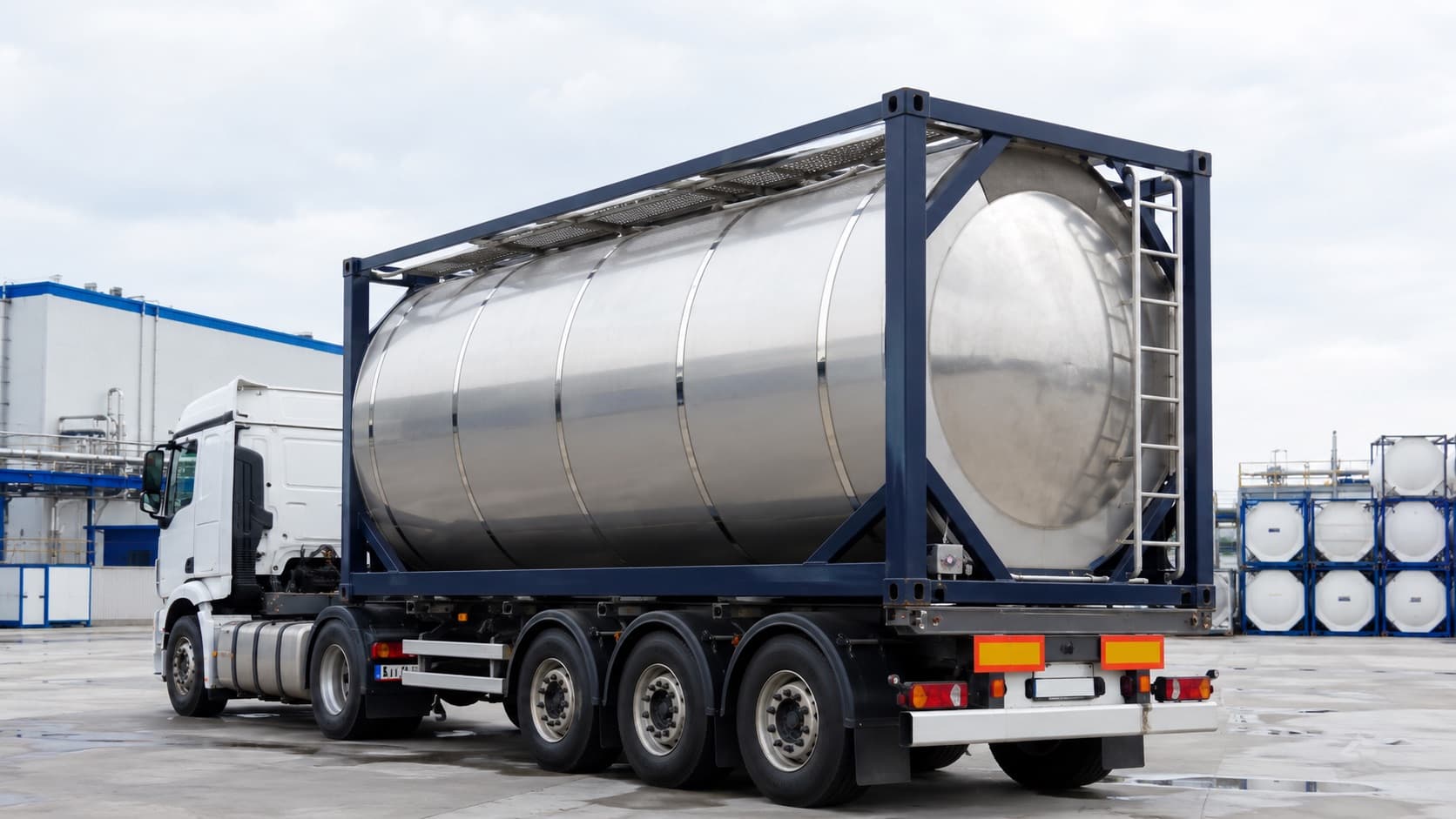
Three habits limit a buyer's exposure to this volatility. First, book equipment — container or flexitank — several weeks ahead of the actual shipment, without waiting for the oil lot itself to be finalized; our comparison of flexitank vs isotank walks through the format trade-offs to settle at this stage. Second, choose the incoterm deliberately: a buyer with its own freight contracts can capture the best rate windows by purchasing FOB Rades or Sfax, while a buyer new to Tunisian logistics may prefer a DAP term that shifts that risk to the seller — our guide to olive oil incoterms covers that choice in detail. Third, build a freight-revision clause into campaign contracts rather than a delivered price fixed for months — it protects both sides from a market swing neither controls, unlike the quality and scheduling parameters already documented in our article on Port of Rades logistics.
A fourth habit is worth adding for buyers who ship several lots per campaign: ask the freight forwarder or carrier for advance notice of general rate increases and peak-season surcharges, which on Mediterranean feeder lines are typically announced two to four weeks ahead. That notice window is short compared to a bulk purchase decision, but it's enough to bring a shipment forward or push it back by a few days and avoid a surcharge window entirely — a marginal saving on a single container, a material one across a full campaign's worth of lots.
At Virginia, freight gets planned alongside the oil
We quote every volume of bulk Tunisian olive oil across several incoterms side by side — FOB, CIF, DAP — precisely so this logistics decision gets made before commitment, not after. This freight context has no bearing on what stays constant from one campaign to the next at Virginia: a COA per lot, systematic tasting and a traced source mill hold regardless of how tight Mediterranean feeders get. Describe your volumes and pickup window in a quote request: a qualified answer within 24 business hours, and if the calendar is tight, we'll tell you as plainly as we quote the oil price.
Read next
Logistics
Port of Radès: Bulk Olive Oil Export Logistics from Tunisia
Radès handles nearly all of Tunisia's bulk olive oil exports: real transit times, seasonal congestion and alternate ports for a reliable shipping schedule.
July 27, 2026 · 7 min read
Logistics
Bonded Warehouse and Call-Off Stock for Bulk Olive Oil
Bonded warehousing, the Tunisian tariff quota and call-off stock: how to defer duty and VAT while distributing bulk olive oil across several EU markets.
July 15, 2026 · 7 min read

Tell us what you need.
Volume, grade, packaging, destination: describe your project and we'll get back to you within one business day with an offer at the best price — or the right questions.