
Bonded Warehouse and Call-Off Stock for Bulk Olive Oil
Published on July 15, 2026 · 7 min
By the Virginia trading team · reviewed by Tarek Neffati, president
A buyer who clears a container of Tunisian olive oil in January to supply customers in Germany, Belgium and the Netherlands through September gains nothing from paying duty and VAT on the whole lot the day it lands, when it will only sell in instalments. Two regimes let that liability be spread out — the customs bonded warehouse and call-off stock — and they work on different points in the flow. Here is how to combine them for a bulk Tunisian olive oil flow serving several European markets.
Two levers, two moments in the flow
A bonded warehouse acts before release for free circulation: non-EU goods stay under customs supervision, duty and VAT suspended, until they leave the regime. Call-off stock acts afterwards: once the oil has cleared customs in one member state, it avoids having to register for VAT in a second member state where it sits before delivery to an already-identified customer. The first defers a customs and tax debt at import; the second simplifies an intra-EU reporting obligation. A trader serving several markets from a single hub often chains the two, in that order.
The bonded warehouse: suspending duty and VAT on non-EU oil
The customs warehousing procedure, set out in Articles 240 to 242 of the Union Customs Code (Regulation (EU) No 952/2013), lets an operator store Tunisian olive oil on EU customs territory for an unlimited period without paying duty, VAT or agricultural levies, as long as it is not released for free circulation. The warehouse can be public — run by an authorised logistics provider in Antwerp, Rotterdam or Fos-sur-Mer, for instance — or private, held under customs authorisation by the importer itself. A T1 transit document travels with the lot for as long as it stays under the regime, including when it moves between warehouses in two different countries.
The benefit goes beyond cash flow. A lot held under bond can be blended with other lots of the same origin, relabelled ahead of release, or re-exported outside the EU without ever triggering a customs debt — useful for a trader who also serves non-EU markets from the same hub. See our guide to olive oil Incoterms: FOB, CIF, DAP for how risk transfers before the lot enters bond.
The Tunisian quota 09.4032
This mechanism matters particularly for Tunisian olive oil. Commission Regulation (EC) No 1918/2006 opens a zero-duty tariff quota of 56,700 tonnes per season for virgin olive oil originating in Tunisia (order number 09.4032). That quota has now been exhausted within the first months of the season for the 9th consecutive year, according to the European Commission's market monitoring. Once it's gone, every tonne imported outside the quota carries the third-country duty, in the order of €124.50 per 100 kg for virgin oil — a figure that changes the arithmetic entirely.
A lot placed in bond on arrival, before the quota is used up, can in practice be released for free circulation as soon as the following season's quota window reopens, without waiting on a new trans-Mediterranean shipment. For a buyer who plans several months ahead, that is a way to lock in an entry price without queuing behind an exhausted quota. See our guide to importing Tunisian olive oil: quota and customs for how the allocation mechanism works.
Call-off stock: supplying several markets without multiplying VAT registrations
Once oil is released for free circulation in one country, moving it on to a customer in another member state raises a separate question: local VAT registration. Directive (EU) 2018/1910, the so-called "quick fixes" package, harmonised the call-off stock regime from 1 January 2020: if a supplier transfers stock to the warehouse of an already-identified customer — known by VAT number before transport, with the supplier having no fixed establishment in that country — the movement is not treated as an intra-EU supply followed by an acquisition, and the supplier does not need to register locally. VAT becomes due only when the customer actually draws down the stock, within 12 months of the goods' arrival.
That differs from classic consignment stock, where the warehouse stays under the supplier's own control: in that case the movement is a taxable supply and local registration is still required. The distinction turns on one test only: who physically and contractually controls the stock once it arrives. For a bottler or distributor drawing down bulk olive oil in regular lots against its own production schedule, call-off stock avoids a registration per market served.
The simplification is conditional, not automatic. If the identified customer changes mid-arrangement, if the stock is not drawn down within the 12-month window, or if part of the lot is diverted to a different buyer, the transfer reverts to being treated as a standard intra-EU supply from the date the condition failed — with the VAT registration obligation applying retroactively. Suppliers running call-off stock at scale keep a dedicated register of the goods in transit, as required under the EU's implementing rules for the regime, tracking arrival dates, the identity of the intended acquirer and any return of unconsumed stock to the country of dispatch.
Comparing the three regimes
| Regime | Status of the goods | Import duty and VAT | Maximum duration | Typical use case |
|---|---|---|---|---|
| Bonded warehouse | Non-EU, under customs supervision | Suspended until the goods leave the regime | Unlimited | Waiting for a quota window, pooling a multi-market hub |
| Call-off stock | EU, already in free circulation | Paid on entry into the 1st member state; no new VAT registration | 12 months | Supplying an identified customer in a 2nd member state without registering there |
| Standard stock in free circulation | EU, under the seller's control | Paid on entry; local VAT registration required | Unlimited | Stock available for sale to several customers not identified in advance |
Where to store: port hubs and minimum volumes
In practice, bonded warehouses suited to bulk liquid concentrate around a handful of hubs — Antwerp and Rotterdam for northern Europe, Marseille-Fos or Genoa for the Mediterranean arc — equipped with stainless-steel tanks and flexitank or isotank transfer capacity. See our comparison of flexitank vs. isotank for choosing the upstream container, and our guide to storing bulk olive oil for the conditions to demand once the oil is released for free circulation. Bonded storage fees are typically billed by the month and by volume; over a horizon of several months they run well below the carrying cost of duty and VAT tied up in the goods.
Virginia structures its bulk Tunisian olive oil lots for exactly this kind of multi-market flow: a network of partner mills in the Sahel and around Sfax, up to 30,000 tonnes accessible per season, systematic tasting and a per-lot COA (acidity, peroxide, K232/K270), with an SGS counter-analysis available before the lot enters bond. Needs are qualified — volumes, release calendar, markets served — within 24 business hours, from our Paris and Sfax/Sahel offices.
What to check before committing to a bonded flow
Before contracting a bonded warehouse or call-off stock arrangement, a professional buyer should clarify with its logistics provider: who holds the customs authorisation (a public warehouse pools it, a private one commits the importer directly); how T1 transfers between warehouses in different countries are documented; what lot-level traceability is kept if lots are blended; and, for call-off stock, whether the end customer is genuinely identified by VAT number before the first shipment — the condition the whole simplification hinges on.
Getting this wrong is not something you fix after the fact: a missed VAT registration in a destination member state triggers a retroactive assessment, and a lot released with no quota window open absorbs a duty charge that can eat several points of margin. Request a quote with your destination markets and release calendar: we calibrate the flow — quota, bonded warehouse, call-off stock — before the first shipment leaves.
Read next
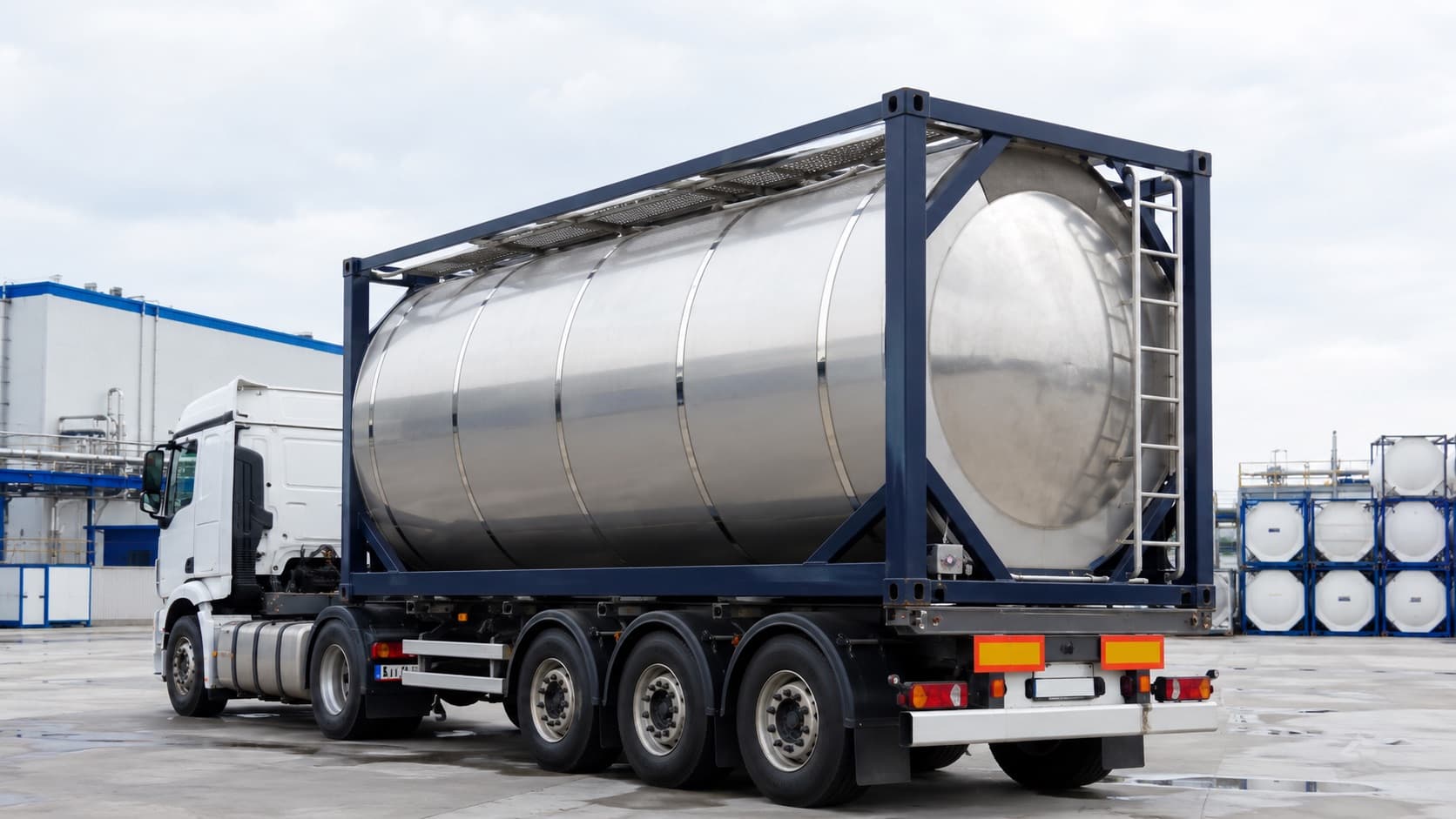
Logistics
Ocean Freight for Bulk Tunisian Olive Oil: Book Early
Mediterranean port congestion and volatile freight rates are reshaping bulk shipping costs — what buyers should lock in before the 2026-2027 harvest.
August 17, 2026 · 7 min read
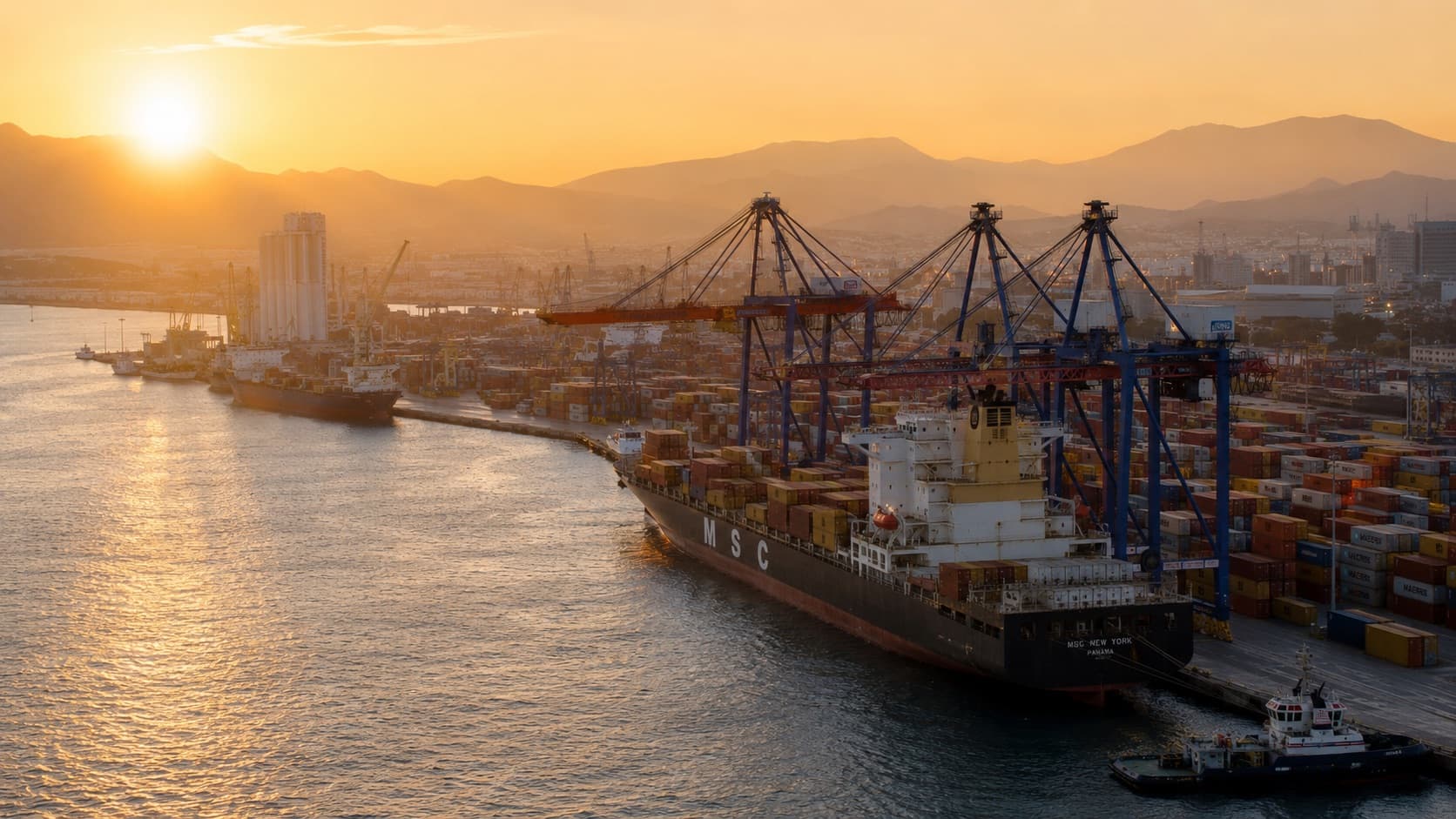
Logistics
Port of Radès: Bulk Olive Oil Export Logistics from Tunisia
Radès handles nearly all of Tunisia's bulk olive oil exports: real transit times, seasonal congestion and alternate ports for a reliable shipping schedule.
July 27, 2026 · 7 min read

Tell us what you need.
Volume, grade, packaging, destination: describe your project and we'll get back to you within one business day with an offer at the best price — or the right questions.