
Cargo Insurance and Letters of Credit for Bulk Olive Oil
Published on July 13, 2026 · 7 min
By the Virginia trading team · reviewed by Tarek Neffati, president
A 24-tonne flexitank that takes on water at sea, an issuing bank that rejects a document set over a half-point mismatch on the bill of lading: two different claims, two different tools to guard against them. A letter of credit secures payment against documents; cargo insurance secures the goods against a transport event. On a bulk Tunisian olive oil flow, the two interact, and handling them separately usually creates gaps — here is how to make them work together in one contract.
Two mechanisms, one goal
A documentary credit never looks at the goods themselves: the issuing bank pays against a conforming document set, full stop. It is a trust mechanism built to work even between parties who have never traded together before. Cargo insurance, by contrast, looks only at the goods: it indemnifies a physical loss — leakage, contamination, handling damage — regardless of how payment was secured. A lot can be perfectly covered by an irrevocable letter of credit and still arrive contaminated if the policy in place does not respond to that risk; conversely, an all-risks policy is worthless if the bank rejects the document set over a date mismatch. Both files need building in parallel, never one after the other.
What the UCP 600 rules actually cover
International documentary credits run on the Uniform Customs and Practice for Documentary Credits (UCP 600), published by the International Chamber of Commerce (ICC). This 39-article body of rules is the de facto reference for global commodity trade. It sets one principle that is often misunderstood: unless stated otherwise, a credit is irrevocable — the issuing bank's undertaking cannot be amended or cancelled without the beneficiary's consent. Four parties are typically involved: the applicant (the buyer), the issuing bank, the advising bank that forwards the credit to the seller, and, where one is added, the confirming bank, which adds its own payment undertaking on top of the issuing bank's.
That confirmation changes the picture for a trader dealing with an issuing bank in a country where banking or political risk is not negligible: confirmation shifts the risk of the issuing bank's default onto a first-tier bank in the seller's country, for a fee. For a first flow with a new counterparty, requiring confirmation is a reasonable precaution, even if it adds slightly to the cost of the credit.
Sight, usance, revolving: matching the structure to shipment frequency
A sight credit pays as soon as a conforming document set is presented — the default choice for a first transaction. A usance credit, payable 30, 60 or 90 days after presentation or after the bill of lading date, gives the buyer a cash-flow window before settlement; the oil has time to move into distribution before the deadline. For a recurring flow — several lots per season from the same supplier — a revolving credit avoids renegotiating a fresh letter of credit for every shipment: the amount automatically reinstates on a defined schedule, up to a cumulative ceiling. It suits a buyer scheduling monthly lifting across a full season rather than a one-off purchase.
The typical document set for a bulk olive oil lot
| Document | Issued by | What it proves |
|---|---|---|
| Commercial invoice | Seller | Price, quantity, Incoterm |
| Bill of lading, "clean on board" | Shipping line | Actual loading, no adverse remark on apparent condition |
| Certificate of origin / EUR.1 | Tunisian chamber of commerce / customs | Tunisian origin, eligibility for the EU tariff quota |
| Certificate of analysis (COA) | Lot's laboratory | Acidity, peroxide value, K232/K270 |
| Insurance certificate | Insurer or seller under CIF/CIP | Cover, clause, insured amount |
| Packing list | Seller | Loading detail, seal numbers |
Every document has to match the credit's wording line for line — not commercial reality, the credit's wording. A bank does not check whether the oil is good; it checks whether the paper complies.
The quantity tolerance rule bulk cargo cannot ignore
A standard flexitank holds between 20 and 24 tonnes depending on the oil's density and loading temperature; an isotank often takes 24 to 26 tonnes. Few lots land exactly on the round figure written into the contract. UCP 600 sub-article 30(b) anticipates exactly this: when quantity is expressed in a unit of weight (tonnes) with no stated number of packing units, a tolerance of 5% more or less applies automatically, provided total drawings do not exceed the credit amount. A credit for 100 tonnes therefore accepts, without reservation, a lot delivered anywhere between 95 and 105 tonnes — unless the credit expressly excludes it. That is real room to manoeuvre for bulk trade, provided you know about it before signing: plenty of poorly drafted credits exclude it without either side noticing until a document gets rejected.
Cargo insurance: the clause that matters is not the one people assume
For a food-grade liquid moved in a flexitank, the choice of insurance clause matters more than the choice of Incoterm. Institute Cargo Clauses (C) — the minimum required under CIF by Incoterms 2020 — responds only to named major casualties: fire, stranding, collision, general average. It covers neither leakage, nor contamination, nor theft, nor handling damage — precisely the real-world claims a flexitank generates. Clause A, the "all risks" cover, responds by default to any accidental physical loss except named exclusions; it is the only clause fit for a food-grade liquid in a soft-sided bag, provided you check the flexitank-specific exclusions some policies still carry (uncertified installation, no loading surveyor's report).
The insured amount follows a market-wide convention: 110% of the CIF invoice value (goods plus freight), to cover margin and incidental costs in a total-loss claim. Under general average — where a shipowner sacrifices part of the cargo or incurs extraordinary expense to save the vessel — every cargo owner contributes to the loss in proportion to its insured value, even if its own lot arrives untouched; without a policy, the buyer must post a bank guarantee before the container is released. That is a classic trap for buyers who wrongly assume general average only concerns them if their own oil is damaged.
The mismatches that stop a payment cold
The most frequent cause of document rejection in agri-commodity trade is not a substantive dispute but a formal gap: a shipment date past the credit's deadline, a bill of lading carrying a handwritten remark that disqualifies it from the "clean" definition, an insurance certificate that fails to name the required clause explicitly, or a quantity exceeding the Article 30 tolerance because the credit ruled it out. A bank does not assess intent — it compares the document to the credit's wording, word for word. The fix sits upstream, not downstream: have the seller review the draft credit before issuance, and confirm every required document can genuinely be produced within the stated deadlines, especially the certificate of analysis, which takes several days to issue after loading.
Which setup for which buyer profile
- First purchase, unknown counterparty: confirmed sight credit, Clause A cover as standard, regardless of Incoterm.
- Recurring flow, established relationship: revolving or usance credit depending on cash-flow needs, insurance negotiated as an annual open policy rather than lot by lot.
- CIF purchase under documentary credit: require the Clause A upgrade in the credit's own wording, not as a side arrangement negotiated separately with the insurer.
A file built before the ship sails, not after
A poorly calibrated documentary credit or a Clause C policy on a flexitank cannot be fixed once the vessel has left port. Virginia prepares its bulk Tunisian olive oil lots with a complete document set from the moment of loading — certificate of analysis, certificate of origin, clean bill of lading — and works with confirmed documentary credits as readily as with direct payment, on the Incoterms detailed in our FOB, CIF, DAP guide. On container choice and its bearing on insured risk, see our comparison of flexitank versus isotank. Request a quote stating your preferred payment method: we calibrate the document set and the insurance cover before the credit is even issued.
Read next
Logistics
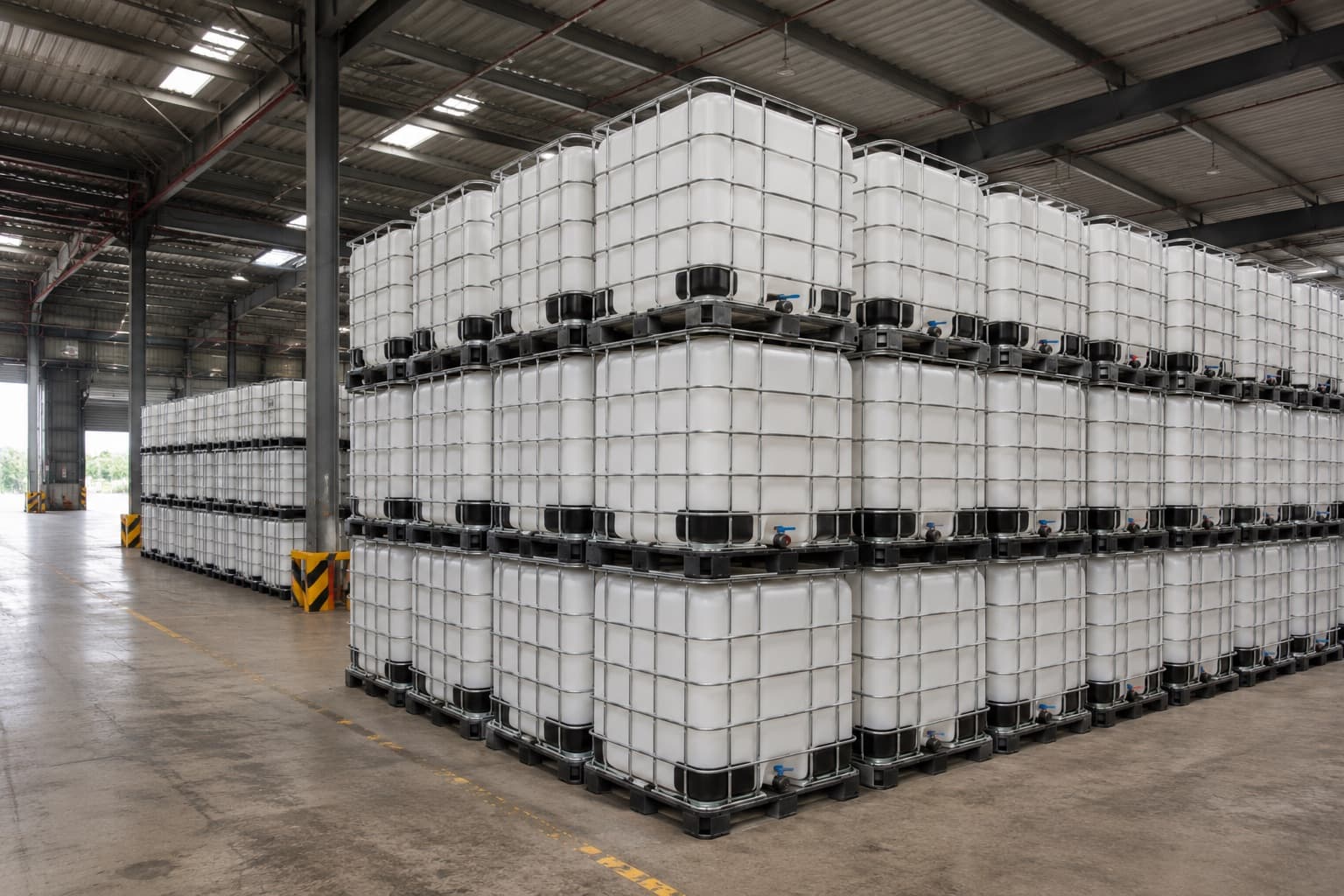
Drums, IBCs and Bag-in-Box: Bulk Olive Oil Under 20 Tonnes
200 L olive oil drums, 1,000 L IBCs or bag-in-box: payloads, how many fit a 20 ft container, cost per litre and use cases for bulk olive oil in small volumes.
July 10, 2026 · 8 min read

Logistics
Olive Oil Incoterms: EXW, FOB, CIF and DAP Explained
Incoterms 2020 for bulk olive oil: who pays what under EXW, FOB, CIF and DAP, where risk transfers, and how to compare offers on a landed cost basis.
July 10, 2026 · 9 min read
Tell us what you need.
Volume, grade, packaging, destination: describe your project and we'll get back to you within one business day with an offer at the best price — or the right questions.